
Welcome to My Web Page!
I am a licensed environmental engineer and experienced IT professional with a broad background in software design, web development, database management (including data modeling, data governance, database architecture design, data ETL, data quality control, and data visualization), statistical analysis, geospatial and hydrologic modeling, teaching, proposal writing, and report preparation. Specific areas of expertise include developing algorithms and writing scripts to extract, transform, cleanse, slice, analyze, and aggregate data with the goal of optimizing data workflows and maximizing the value of data in guiding management decisions. Specific fields of interest include environmental engineering and biomedical informatics.
My Background
The overarching theme throughout my career has been maximizing the utility of data. My journey working with data started with an internship at the Maryland Environmental Service, where I used soil and water sampling data, weather data, and projected dredged material inflow data to model the mass balance of the system and estimate the remaining life of Hart-Miller Island. In my first job after graduating from college, I collected soil and water samples from an Air Force base in Arizona, then organized, complied, cleaned and submitted the data to the Air Force for inclusion in their Environmental Resources Program Info Management System (ERPIMS, formerly IRPIMS). For the next 10 years, I designed, constructed, and managed data systems containing the results from environmental sampling programs.
In 2000, I started graduate school and graduated with a PhD from Carnegie Mellon University. Over the next several years I taught classes at Geneva College and Carnegie Mellon University and worked on a research project modeling the effects of watershed management practices on water quality. In 2014, my career pivoted to focusing on biology data and web application development. In 2016, I released a web application designed to analyze the effects of nanomaterials on zebrafish.
From 2016 to 2023, I worked as a software/database engineer on the Microphysiology Systems Database (MPS-Db), a publicly accessible web application funded by the National Center for Advancing Translational Sciences (NCATS) and developed at the University of Pittsburgh Drug Discovery Institute. The MPS-Db was a platform for capturing, managing, visualizing, analyzing and sharing experimental study data. To support the integration of genomic data into the MPS-Db, I deepened my knowledge of bioinformatics by enrolling at the University of Pittsburgh Department of Biomedical Informatics. I completed the certificate program in 2022. In 2023, the MPS-Db was merged into Numa Biosciences (formerly Nortis), and in 2024, the platform transitioned to the subscription service, EveAnalytics.
Working
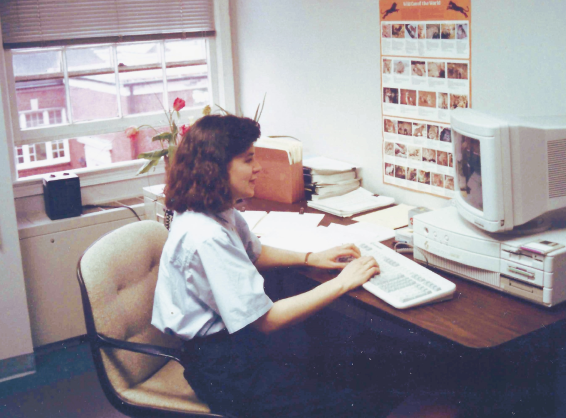
Preparing data for submission to the Air Force's IRPIMS.
Presenting
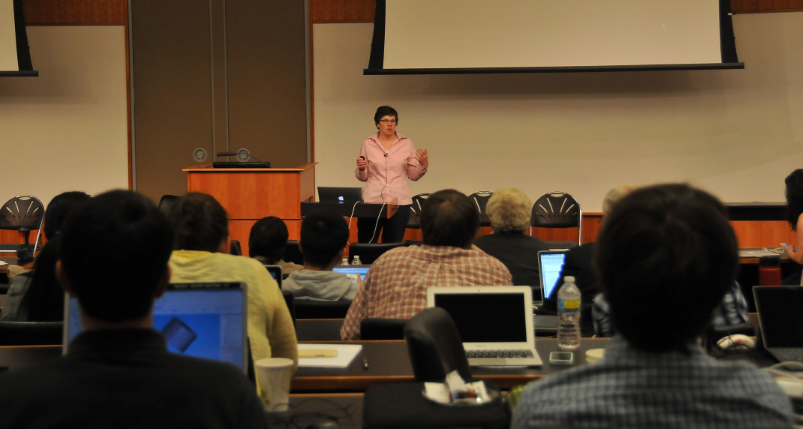
Presenting the database design and implementation of a tool for modeling nanomaterial toxicity.
Traveling
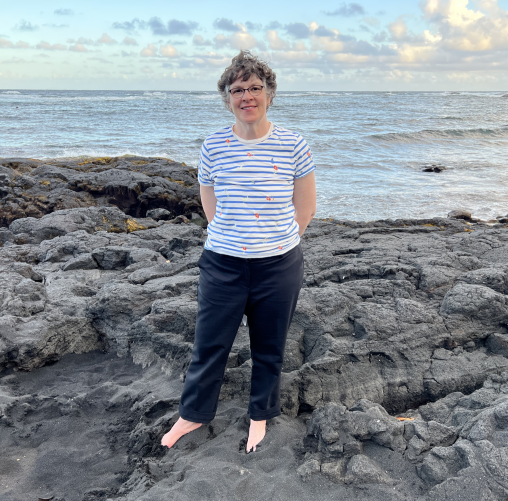
Visiting a black sand beach in a recent trip to Hawaii.
Fun Facts About Me
- I am a lifelong leaner.
- I am detail oriented.
- I have good people skills and communicate effectively.
- I enjoy working collaboratively and independently.
- I think working with data is like solving a puzzle and I enjoy solving puzzles.
- I work best by mulling over complex problems, breaking them into pieces, and placing each piece into a solution network.
- I like animals and watch too many vet shows.
- I help with the children's ministry at my church.
- I play the flute in the Harrisville Community Band, the Mercer Community Band, and in the ACTS Orchestra.
- I manage the websites for the Harrisville Community Band and for ACTS.
- I enjoy bike riding.
- I have nine siblings.
- I am a fan of Star Trek, Star Wars, Stargate, and Fringe.
- My favorite joke: "I am not an outlier, I just haven't found my distribution yet."
Skills Summary List
Skills as a Searchable and Sortable Table
- Use the "Search" box to search the table by the content of any column.
- Use the dropdown of the "entries per page" to select the number of rows to show in the table.
- Use the up and down arrows in the column headers to sort the rows. For multi-column sort, sort the first column, then hold the shift key and click the sort arrow in additional column headers.
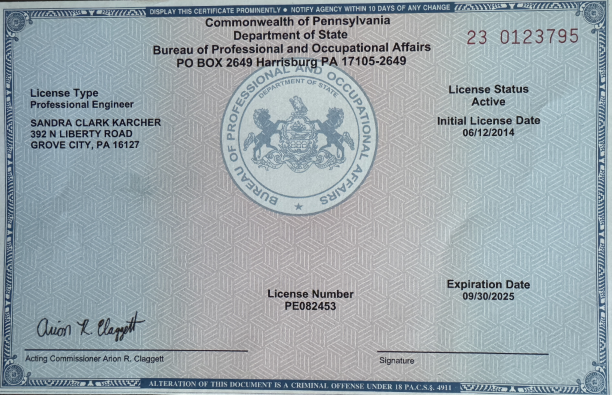
Active Certifications & Licenses

Education
PhD
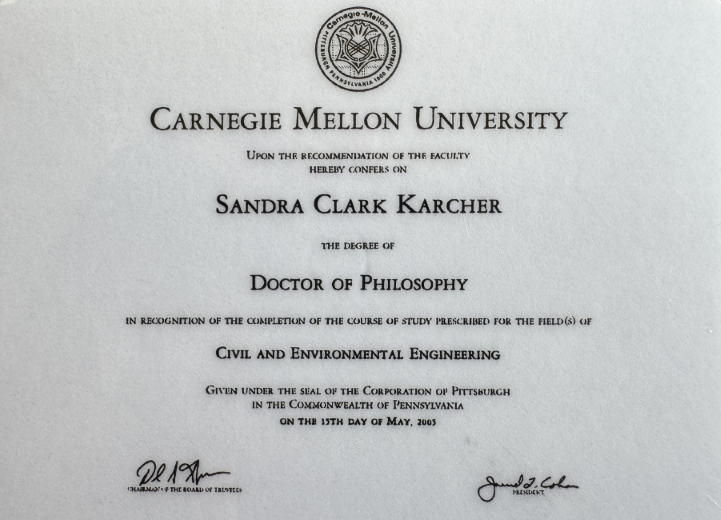
Civil and Environmental Engineering
Carnegie Mellon University
Master's Level Certificate
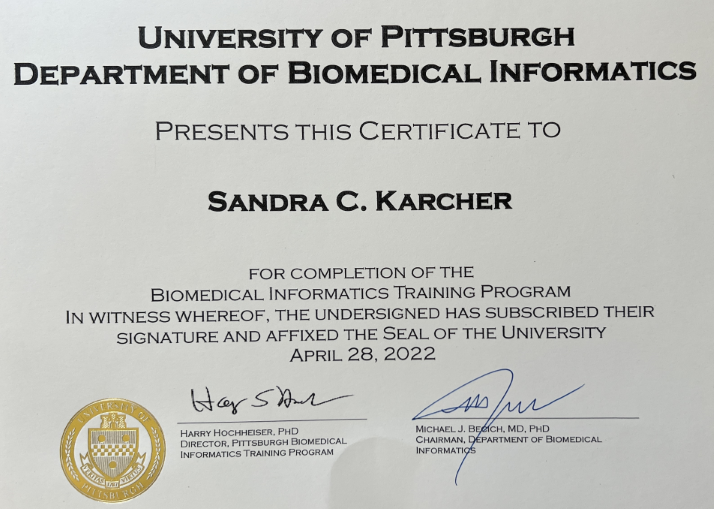
Biomedical Informatics
University of Pittsburgh
Master's
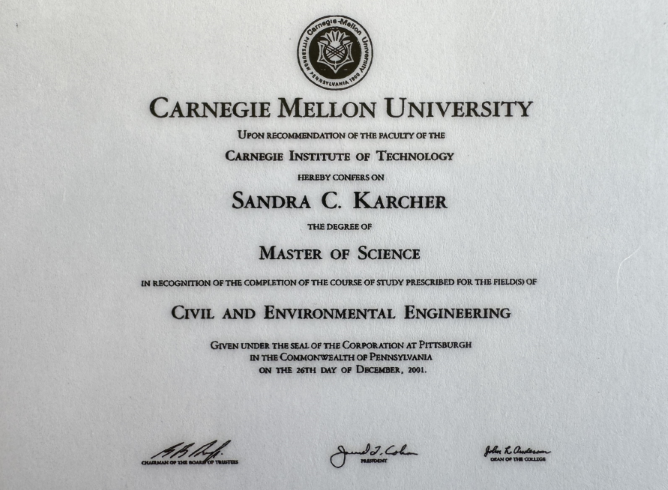
Civil and Environmental Engineering
Carnegie Mellon University
BS
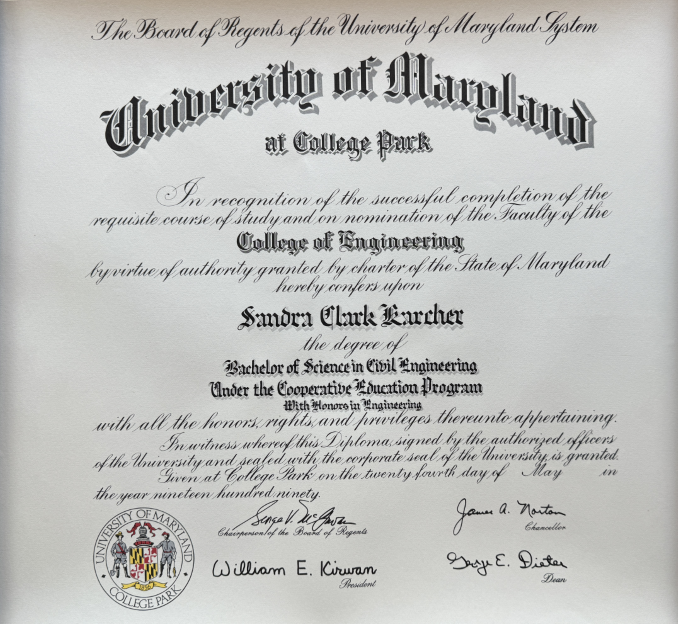
Civil and Environmental Engineering
University of Maryland
Work Experience
- 2024 to Current – Scientific GIS Web Developer, Riverside Technology, inc.
- Establishing workflows to connect AWS to ArcGIS Online (NOAA GeoPlatorm). Working with NWIS, VIIRS, and Atlas 14 data in ArcGIS Online and ArcGIS Pro.
- Developing dashboards of hydrologic data (e.g., precipitation and river flow) for inclusion in an ArcGIS Online StoryMap.
- 2023 to 2024 – Senior Software Engineer, Numa Biosciences (formerly Nortis)
- Continuing the work on the
- Identified an operational problem with a data integration workflow, defined potential solutions and solicited user feedback, selected the best solution then designed and developed a tool that enabled users to upload/download data and metadata into/out of EveAnalytics (formerly known as the MPS-Db and the BioSystics-AP) using the same data format.
- Led the development team through the process of transitioning biosystics-ap.com (an open data repository) to eveanalytics.com (a subscription-based data management and analytics platform).
- Served as the Scrum Master (using the Agile methodology) throughout the process of transitioning biosystics-ap.com to eveanalytics.com.
Microphysiology Systems Database (MPS-Db) - 2016 to 2023 - Staff System/Programmer (Data Analyst/Modeler), University of Pittsburgh Drug Discovery Institute
- Working on the
- Deployed Django web application of the MPS-Db in AWS using Elastic Beanstalk.
- Enabled the integration of transcriptomic data into the MPS-Db.
- Designed and developed a statistical tool to calibrate raw plate reader assay data and incorporated it into the MPS-Db.
- Developed algorithms to extract, transform, cleanse, slice, analyze, aggregate, and visualize data to support downstream analysis, modeling, and visualization (primarily using Python, VBA and SQL).
- Prepared training materials for internal team members and external collaborators.
- Provided training and technical support to users of the MPS-Db.
- Designed an effective data governance framework for uploading data into the MPS-Db (e.g., defining the parameters for data acquisition, import, and usage; selecting appropriate controlled vocabulary to enable data from disparate sources to be aggregated together; creating processes for identifying and resolving data quality issues).
- Maintained situational awareness through continuous assessment, data set acquisition, user feedback collection, and associated decision support activities.
Microphysiology Systems Database (MPS-Db) - 2021 to Current - CEO, The Savii Group, LLC
- In 2024, developed webpages to visualize and share time series data for samples collected from public water systems in Mercer County, PA:
- Explore data with one plot per location and substance using Tableau Public (Click here to go to the Dashboard).
- Explore data with multilocation per substance plots using Tableau Public (Click here to go to the Dashboard).
- Compared working with Tableau Public and ArcGIS Online (free version) to visualize and share sampling locations and associated time series data (Click here to review my comparison).
- In 2024, developed webpages to visualize and share time series data for samples collected from public water systems in Mercer County, PA:
- 2014 to 2016 - Postdoctoral Project Engineer, Carnegie Mellon University
- Worked in collaboration with the Center for the Environmental Implications of NanoTechnology, nanoHUB, and the Nanomaterial-Biological Interactions Knowledgebase to develop analytical and visualization informatics tools to be used on experimental data exploring the fate and associated risk of introducing nanomaterials into the environment (https://nanohub.org/resources/23991).
- Designed and built a relational database to aggregate, store, and maintain data collected as part of experimental studies performed using nanomaterials.
- 2013 to 2014 - Adjunct Professor, Carnegie Mellon University
- Taught Databases & Data Systems for Environmental Modeling, a hands-on class focused on finding, formatting and visualizing data frequently used in environmental modeling (including land use, land cover, climate, crop, and hydrography data).
- 2009 to 2012 - Postdoctoral Research Associate, Carnegie Mellon University
- Collaborated with colleagues at the EPA to assess the challenges associated with modeling water systems from the watershed through the drinking water treatment process.Published the analysis and a proposed conceptual solution to enable joint modeling of natural and engineered water systems (EPA/600/R-12/030 March 2012).
- Identified and integrated hydrologic and land use datasets to support water flow and contaminant concentration forecasting. Focused on data from USGS National Water Information System (NWIS), EPA STOrage and RETrieval Data Warehouse (STORET), and CUAHSI Hydrologic Information System Observations Data Model (ODM).
- Quantified nutrient loading resulting from changes in watershed management practices using the Soil and Water Assessment Tool (SWAT), an ArcGIS modeling tool.
- Worked extensively with ArcGIS and ArcSWAT, an add-in to the Environmental Systems Research Institute (ESRI)’s ArcGIS.
- 2006 to 2008 - Adjunct Professor, Geneva College
- Taught Solid & Hazardous Waste Management and Water & Wastewater Treatment. The solid waste class focused on the collection, transformation, and disposal of solid and hazardous waste. The water class included a weekly lab and focused on technologies used in testing and treating water.
- 2000 to 2005 - Graduate Student, Carnegie Mellon University (Master’s & PhD)
- Designed and developed a statistical modeling tool to determine the likely pathways of dechlorination of polychlorinated biphenyls in river sediments. Tool implementation required extensive use and integration of Microsoft Access and Excel using Visual Basic for Applications (VBA) and SQL.
- Served as teaching assistant for the freshman level introduction to civil and environmental engineering course and for the graduate level probability and statistics course.
- 1993 to 2002 – President & Consultant, Data Systems DCM
- Compiled and standardized U.S Air Force environmental sampling data from multiple sources provided in a variety of formats.
- Developed and programmed tools to search for patterns, trends, and anomalies in data; to flag potentially erroneous data; and to cleanse the database (primarily using VBA and SQL).
- 1990 to 1993 – Staff Engineer, The Earth Technology Corporation
- Developed and managed several databases containing environmental data. Responsibilities included preparing the data for risk assessment, creating scripts for updating the data, securing the database, and using the Air Force's Contractor Data Loading Tool (CDLT) and quality control checking tool to prepare data for submission to the Air Force.
- Acted as Assistant Project Manager for a remedial investigation of 11 Installation Restoration Program (IRP) sites. Responsibilities included running the field program in the startup phase of the project, locating soil gas grids, supervising the soil gas contractor, mapping and contouring soil gas results, sampling soil borings, and developing cost modifications to the project contract.
- Worked as part of a three-member team to produce the Defense Environmental Restoration Program Annual Report to Congress for Fiscal Year 1990. Responsibilities included interacting closely with computer database personnel operating the Defense Environmental Restoration Program Management Information System and representatives of the Army, Navy, Air Force, and Defense Logistics Agency.
- Selected as a team member tasked with designing an ORACLE based data management system.
- Prepared speeches and briefing books on the environmental progress of the Defense Environmental Restoration Program. Speeches were given by the Office of the Deputy Assistant Secretary of Defense for the Environment personnel.
- 1988 to 1990 – Consultant/Employee, The Maryland Environmental ServiceM
- Using the daily operational data (inflow and outflow) and environmental variables such as precipitation and evaporation, forecasted the fill rate and remaining life of the dredge material containment facility, Hart-Miller Island.
- Presented monthly project updates to the Hart-Miller Island Citizens Oversight Committee.
- Assisted senior engineer in program planning to put a soil cap on a 40-acre site. Work included developing a grading plan, calculating earth quantities, planning sediment and erosion control, obtaining state permits, and contracting with vendors.
- Performed other duties as assigned, including using hydrologic principles to calculate groundwater flow under a landfill, supervising leveling surveys, and photographing work progress.
- Summer 1989 - Engineering Research Scholar, University of Maryland
- Tested a potential revision to the Muskingum hydrograph routing method to more accurately predict sediment load during peak flow. Resulting research paper won the Young Engineers Award for Undergraduate Research by the Washington Society of Engineers, 1990.
- Analyzed scour and deposition of a river channel using HEC6, a computer model developed by the Corps of Engineers.
Publications
Select Publications
- Schurdak M, Vernetti L, Bergenthal L, Wolter QK, Shun TY, Karcher S, Taylor DL, Gough A, Applications of the microphysiology systems database for experimental ADME-Tox and disease models. Lab Chip. 2020 Apr 14; 20(8):1472-1492. https://doi.org/10.1039/C9LC01047E
- Dilán-Pantojas, IO, Boonchalermvichien, T, Taneja, SB, Li, X, Chapin, MR, Karcher, S, Boyce, RD, Broadening the capture of natural products mentioned in FAERS using fuzzy string-matching and a Siamese neural network. Sci Rep 14, 1272 (2024). https://doi.org/10.1038/s41598-023-51004-4
- Karcher, S.C., Harper, B.J., Harper, S.L., Hendren, C.O., Wiesner, M.R., Lowry, G.V., Visualization Tool for Correlating Nanomaterial Properties and Biological Responses in Zebrafish. Environmental Science: Nano 3: 1280-1292 (2016). https://doi.org/10.1039/C6EN00273K
- Karcher, S.C.; VanBriesen, J.M.; Nietch, C.T. (2013) "Alternative land use layer for spatially-informed watershed management decision-making using SWAT" ASCE Journal of Environmental Engineering 139(12): 1413–1423. http://dx.doi.org/10.1061/(ASCE)EE.1943-7870.0000770
- Marchese Robinson RL, Lynch I, Peijnenburg W, Rumble J, Klaessig F, Marquardt C, Rauscher H, Puzyn T, Purian R, Åberg C, Karcher S, Vriens H, Hoet P, Hoover MD, Hendren CO, Harper SL. How should the completeness and quality of curated nanomaterial data be evaluated? Nanoscale. 2016 May 21; 8(19):9919-43. https://doi.org/10.1039/C5NR08944A
Additional Publications
- Karcher, S.C.; Willighagen, E.L.; Rumble, J.; Ehrhart, F.; Evelo, C.T.; Fritts, M.; Gaheen, S.; Harper, S.L.; Hoover, M.D.; Jeliazkova, N.; Lewinski, N.; Robinson, R.L.M.; Mills, K.C.; Mustad, A.P.; Thomas, D.G.; Tsiliki, G.; Hendren, C.O.; (2018) "Integration among Databases and Data Sets to Support Productive Nanotechnology: Challenges and Recommendations" NanoImpact 9: 85-101.
- Karcher, S.C.; VanBriesen, J.M.; Nietch, C.T. (March 2012) "Assessing the Challenges Associated with Developing an Integrated Modeling Approach for Predicting and Managing Water Quality and Quantity from the Watershed through the Drinking Water Treatment System" EPA/600/R-12/030.
- Karcher, S.C., VanBriesen, J.M., and Small, M.J (2007) "Numerical Method to Elucidate Likely Target Positions of Chlorine Removal in Anaerobic Sediments Undergoing Polychlorinated Biphenyl Dechlorination" ASCE Journal of Environmental Engineering, 133(3): 278-286.
- Karcher, S.C., Small, M.J., and VanBriesen, J.M., (2004) "Statistical Method to Evaluate the Occurrence of PCB Transformations in River Sediments with Application to Hudson River Data" Environmental Science and Technology 38:6760-6766.
- Ph.D. Thesis: "Statistical Method for Polychlorinated Biphenyl Dechlorination Modeling and Pathway Analysis", 2005.
- Contributor to "Sustainable Water Innovation Initiative for Southwestern Pennsylvania" a report of the Water Innovation Consortia Planning Committee September 2012 (http://www.pittsburghwed.com/resources/index.html; accessed June 30, 2013).
- Contributor to "Living in the Water Environment: the WATERS Network Science Plan" Prepared for review by the National Science Foundation and the National Research Council in May 2009.